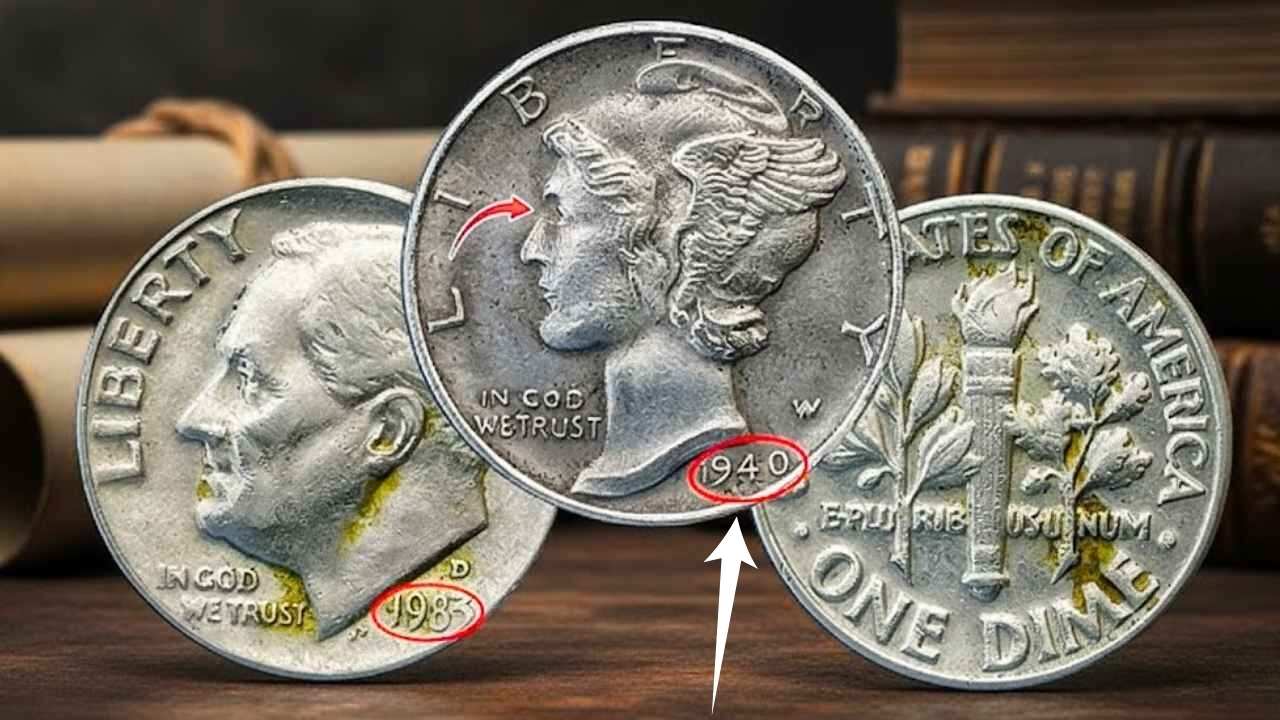
Rare Mercury Dime Valued at $1.1 Million: The Mercury Dime is one of the most beloved coins in American numismatic history. Struck between 1916 and 1945, this small silver coin has captured the imagination of collectors for decades. While most Mercury Dimes are worth only a few dollars today, one extraordinarily rare version has reached an astonishing valuation of $1.1 million. This guide explores why this coin is so valuable, how to identify it, and what collectors should know before searching for one.
Understanding the Mercury Dime
Despite its popular name, the Mercury Dime does not actually depict the Roman god Mercury. The image on the front is Lady Liberty wearing a winged cap, symbolizing freedom of thought. The reverse side shows a fasces, an ancient symbol of strength and unity, paired with an olive branch representing peace.

The coin was designed by renowned sculptor Adolph A. Weinman and struck in 90 percent silver. Its artistic beauty and historical significance make it a favorite among collectors, even in lower grades.
Why One Mercury Dime Is Worth $1.1 Million
The Mercury Dime that commands a seven-figure price is the 1916-D Mercury Dime. The “D” mintmark indicates it was produced at the Denver Mint. Only 264,000 of these coins were minted, making it the lowest mintage of the entire Mercury Dime series.
What truly elevates its value is survival rate and condition. Many were heavily circulated, damaged, or melted down over time. Finding one in pristine, near-perfect condition is exceptionally rare. High-grade examples with strong details, original luster, and no signs of cleaning can sell for hundreds of thousands of dollars. One specimen graded at the top tier has crossed the $1.1 million mark at auction.
Key Features to Identify a 1916-D Mercury Dime
Correct identification is critical because counterfeit versions exist. The most important detail is the mintmark. On genuine coins, the small “D” appears on the reverse side, near the bottom left of the fasces.
The placement, shape, and alignment of the mintmark matter. On authentic coins, the “D” is well-defined and properly positioned. Added or altered mintmarks often look shallow, misshapen, or slightly off-center.
Collectors should also examine the date carefully. The numerals on a real 1916-D Mercury Dime have specific shapes and spacing that differ from later years. Comparing with verified reference images can help detect inconsistencies.
The Importance of Coin Condition
Condition plays a massive role in determining value. Coin grading ranges from Poor to Mint State, with professional grading services assigning numerical scores. A heavily worn 1916-D Mercury Dime may still be worth thousands, but only those in exceptional condition approach six or seven figures.
Uncirculated examples with sharp details on Liberty’s hair, clear wing lines, and full bands on the fasces are especially desirable. Original surfaces without scratches, discoloration, or evidence of cleaning dramatically increase value.

Common Mistakes Collectors Should Avoid
One of the biggest mistakes collectors make is assuming any 1916 Mercury Dime is valuable. Only those with the Denver mintmark carry the extreme rarity premium. Philadelphia and San Francisco versions from the same year are far more common.
Another mistake is relying on unverified sellers or skipping professional authentication. Due to the high value of the 1916-D Mercury Dime, it is one of the most counterfeited U.S. coins. Certification from a trusted grading service is essential before buying or selling.
Improper storage is also an issue. Exposure to moisture, heat, or harsh cleaning chemicals can permanently damage a coin and significantly reduce its value.
Where Rare Mercury Dimes Are Found
While most high-grade examples are already in private collections or museums, rare finds still occasionally surface. Some have been discovered in old family collections, estate sales, or forgotten safety deposit boxes.

Coin roll hunting rarely yields a 1916-D Mercury Dime today, but collectors continue to search because of its legendary status. Even finding a lower-grade example can be life-changing due to its high baseline value.
Should You Get Your Mercury Dime Appraised
If you believe you own a Mercury Dime from 1916, especially one with a visible mintmark, professional appraisal is strongly recommended. Certified grading not only confirms authenticity but also establishes market value and protects the coin for future resale.
Reputable auction houses and coin dealers can provide guidance, but collectors should always verify credentials before handing over a potentially valuable coin.
Conclusion
The $1.1 million Mercury Dime stands as one of the most iconic treasures in American coin collecting. Its rarity, historical significance, and stunning design make it a dream find for collectors worldwide. While the odds of discovering one are slim, understanding how to identify, authenticate, and preserve Mercury Dimes ensures that collectors are prepared if luck strikes. Whether you are a seasoned numismatist or a curious beginner, the Mercury Dime remains a powerful reminder that even the smallest coins can carry extraordinary value.